
Chiesa di Santa Maria e San Siro
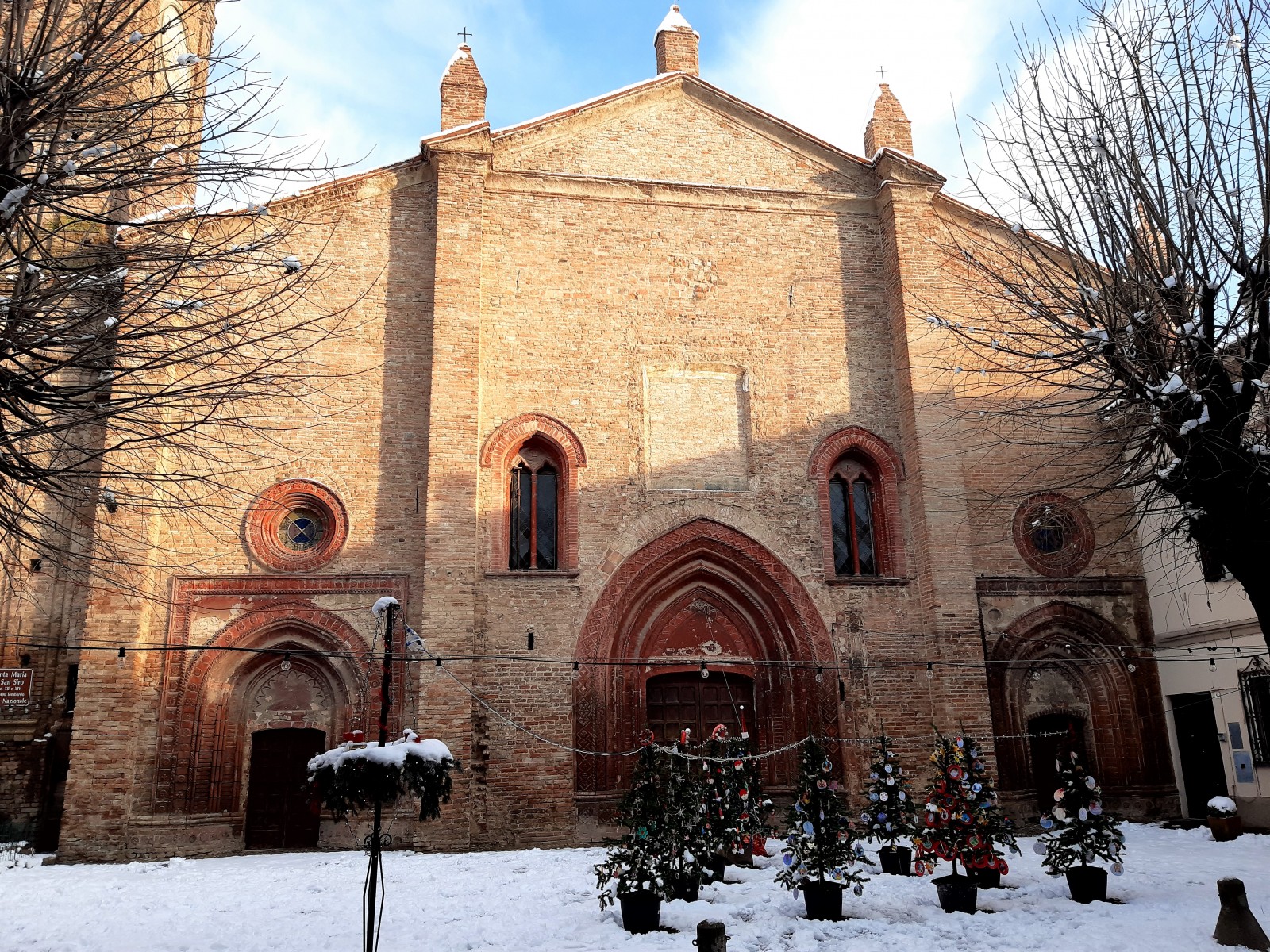
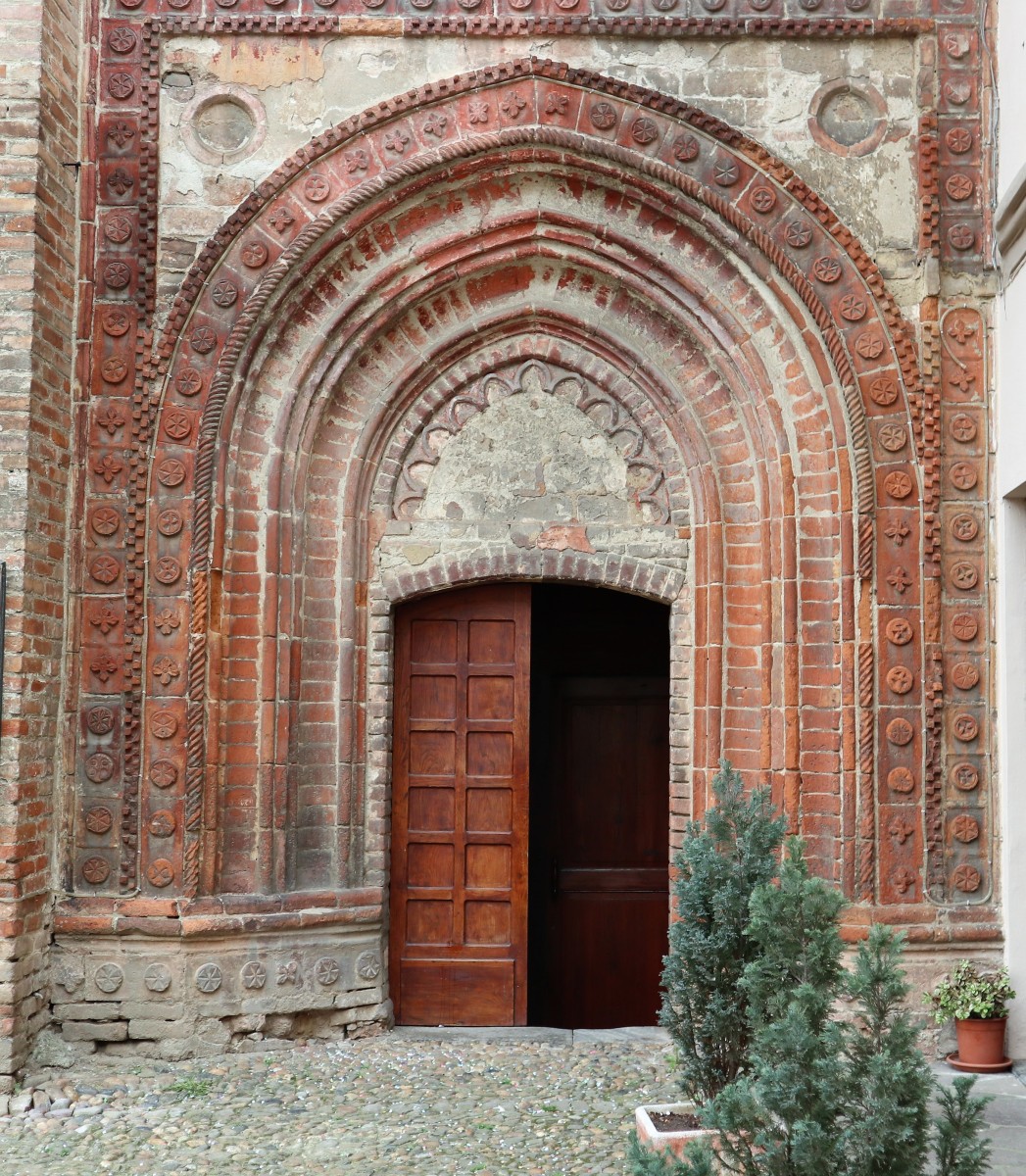
The building we see today dates back to the late 14th and early 15th centuries: its main stylistic references are Lombard Gothic, and more specifically, the Lomellina area. The typology is that of the so-called "hall churches": the side aisles are high enough to create, together with the central nave, the effect of a unified space, perceptible at a glance. The façade is austere but enlivened by three slightly splayed pointed portals, richly decorated in terracotta, and two buttresses surmounted by pinnacles. The side doors are surrounded by refined panels—which have attracted the attention of scholars—while the outline of the central portal is highlighted by a succession of twisted cordon decorations and plant motifs. These are typical examples of Visconti-Sforza brick architecture, a typology featuring distinctive stylistic features such as elaborate pointed-arch portals within frames, with decorated terracotta panels creating an overall refined structure. The interior is divided into three naves distributed across five bays, at the ends of which are a central choir and two chapels with an almost square plan. A rigorous geometry is evident here, based on the repetition of square modules in the plan, reminiscent of Cistercian churches. The rhythm is marked by imposing cylindrical columns topped by austere cubic capitals, and the vaults are cross-ribbed, a characteristic of Gothic architecture. This creates a luminous space, in which the parts correspond in harmonious balance, forming an area of noble and sober beauty. While the spatiality and rigorous layout are still those of Cistercian spaces, the overall formal layout confirms that the foundation of Santa Maria belongs to the late 14th-century religious architecture of the Po Valley. Naturally, the transformations that took place within the church over the centuries must be taken into account: we can thus imagine the interior walls completely frescoed in the 15th century, a widespread practice at the time, while already in the late 16th century, as a result of the new regulations established by the Counter-Reformation, significant changes to the interior furnishings were likely made. These changes continued between the 17th and 18th centuries in homage to the new Baroque aesthetic, traces of which can still be seen in the presbytery. Don Franzosi's restoration work eliminated several altars, a legacy of that era and taste, returning to the original sobriety. It should be added that the original bell tower formed a single body with the church and was located above the left portal. In a report by the parish priest, written during a pastoral visit in the late 17th century, it is described as a very tall Gothic tower. It collapsed disastrously one night in February 1704, taking part of the façade with it, fortunately without causing any casualties. It was hastily rebuilt, obviously in the late Baroque style of the period, this time outside the church.
Information and contacts
piazza Roma, 81 - 15045 Sale (AL)
Telephone: +39 335 344.107
Telephone 2: +39 340 926.4712
E-mail: visite@santamariaesansiro.it
Link
https://santamariaesansiro.it/